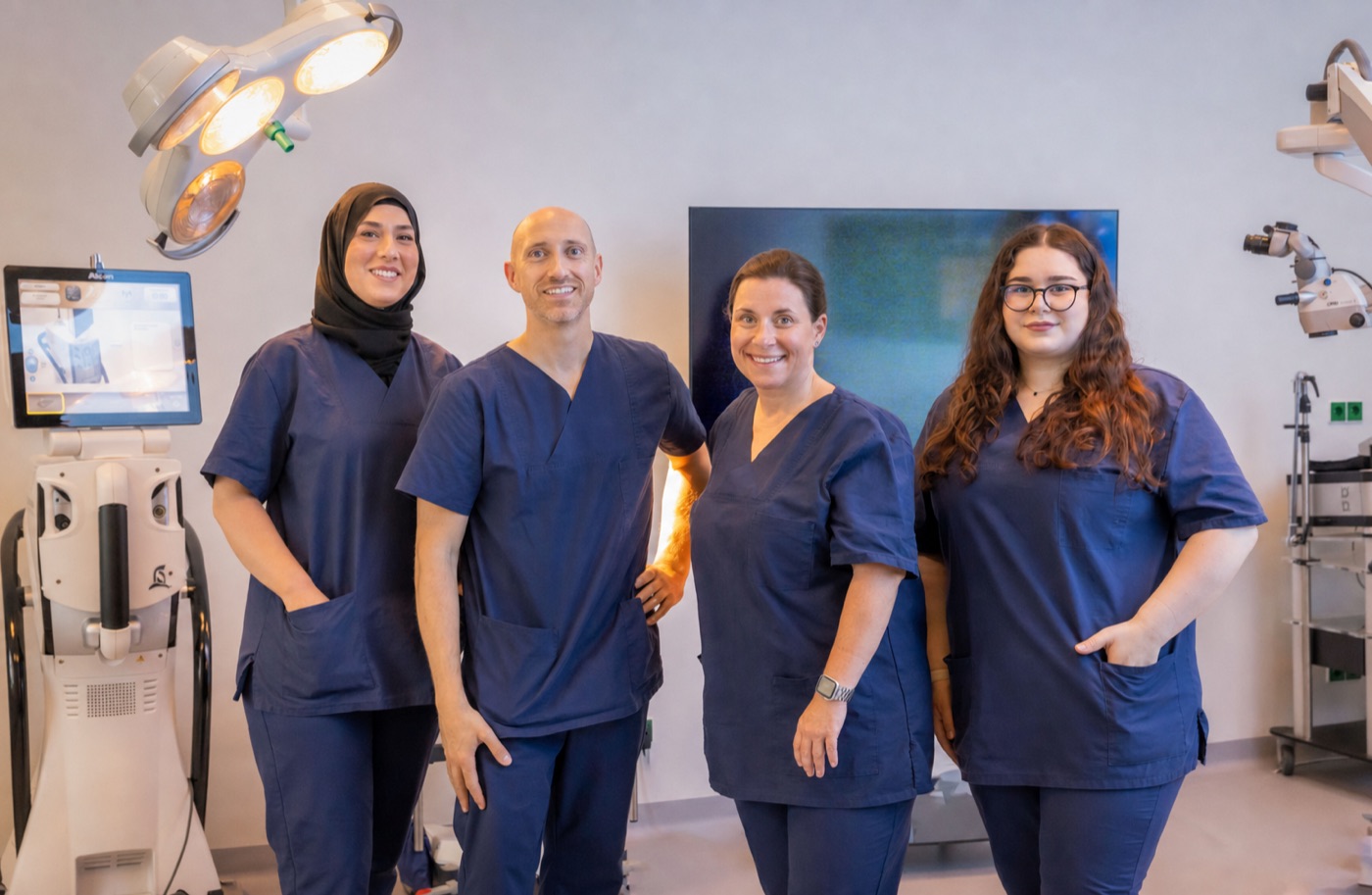
A thorough medical history
We listen carefully and assess your symptoms, history and personal visual needs together.
Modern eye care requires precision. Good treatment also needs time, trust and attention to the person behind the symptoms.
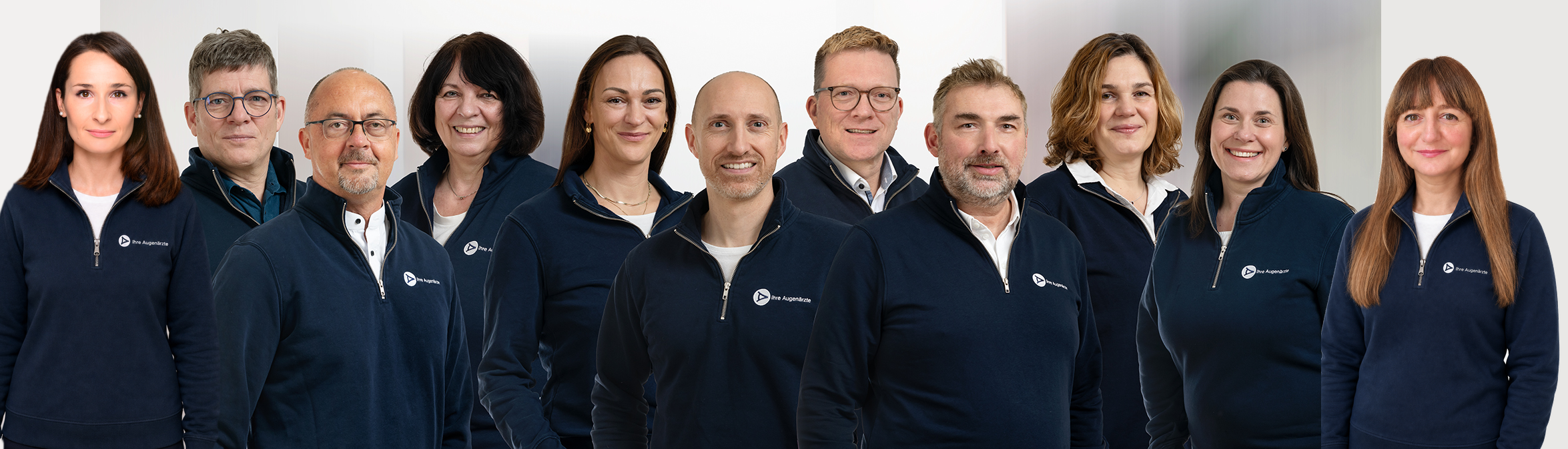
Need a repeat prescription, a copy of your results or a referral? Have a question for the practice? Send your request online through medflex.
We are currently testing this service only at our Savignyplatz practice.
The external medflex contact page currently opens in German.
You will be taken to our practice’s contact page on medflex.
Sudden eye symptoms? Please read our urgent care advice.Three introductions to our medical team and modern surgical care.
Dr. Claudia Mahraun explains keratoconus, cross-linking and other outpatient corneal procedures.
My name is Dr. Claudia Mahraun. I have been part of the Ihre Augenärzte team since early 2024. After ten years at a clinic specialising in corneal surgery, I now focus on outpatient corneal and cataract surgery within our team, particularly keratoconus. Keratoconus is a progressive thinning and bulging of the cornea that often begins in adolescence or early adulthood. In suitable cases, cross-linking can stabilise the cornea and slow progression. The main aim is long-term corneal stability rather than a guaranteed improvement in visual acuity, although vision may change or improve in individual patients. Please allow one to two hours at the practice on the treatment day; the procedure itself usually takes 30 to 40 minutes. With local anaesthetic eye drops, the procedure is generally well tolerated. However, pain, sensitivity to light and a pronounced foreign body sensation may occur in the first few days afterwards. General anaesthesia is normally unnecessary; patients remain awake and able to respond. Contact lenses cannot be worn immediately after the procedure. When rigid contact lenses can be worn again or refitted is decided individually according to healing. The time you need off work also depends on healing and your occupation. We monitor healing closely in the first few days, then extend the intervals between checks. In addition to cross-linking, we perform other outpatient corneal procedures, including surface debridement with alcohol or EDTA for recurrent erosions or other corneal disorders, and amniotic membrane transplantation. I work in both non-surgical and surgical care and am grateful to be part of our experienced team.
Stefan Heinrich explains glaucoma treatment, eyelid surgery, macular degeneration and diagnostic tests.
My name is Stefan Heinrich. In 2010, I took over the family practice from my mother, developed it into a medical care centre (MVZ), and now work mainly at Savignyplatz. Patients often do not notice glaucoma at first because it usually progresses slowly. Raised intraocular pressure is an important treatable risk factor, but glaucoma can also occur at statistically normal pressure levels. Diagnosis therefore includes assessment of the optic nerve head as well as pressure measurement and, depending on the findings, visual field testing and OCT. Glaucoma can be treated with regular eye drops, laser treatment or, if these are insufficient, surgery to reduce pressure. Treatment is tailored to each individual. At the practice, I perform upper and lower eyelid surgery. An upper eyelid lift removes excess skin or protruding fatty tissue. On the lower eyelid, enlarged under-eye bags or abnormal eyelid positions can be treated. We also remove small benign or malignant tumours, styes and chalazia. Before an upper eyelid lift, the skin to be removed is precisely marked so that the eyelid closes properly afterwards. The incision and sutures lie in the upper eyelid crease. The fine sutures are removed after about a week; swelling or bruising may remain visible for one to two weeks. In wet macular degeneration, blood vessels develop at or beneath the area of sharpest vision. Leaking fluid can cause swelling and rapid loss of vision. This can often now be treated with medicines injected directly into the eye. Important examinations include the slit lamp, pressure measurement, assessment of the spectacle prescription, visual acuity and visual field, and detailed OCT imaging. Anyone who suddenly notices new floaters or cloudy areas in the vitreous should have an ophthalmological examination with dilated pupils.
Tomas Engels explains cataracts, artificial lenses, cataract surgery and aftercare.
My name is Tomas Engels. I am one of the ophthalmologists at Savignyplatz and perform cataract and eyelid surgery. I have been a permanent member of the team since September 2021. A cataract is clouding of the eye’s natural lens, usually associated with ageing. It causes blurred vision, increased sensitivity to glare and reduced visual acuity. Treatment replaces the cloudy lens with a clear artificial lens. Whether glasses are needed afterwards depends on the chosen lens, healing and any other eye conditions. A monofocal lens can, for example, provide good distance vision; reading glasses are then usually needed for near vision. Other lenses can reduce dependence on glasses, but have their own optical advantages and disadvantages. Before surgery, we take measurements to calculate the appropriate power of the artificial lens, considering your visual needs and any other conditions. Cataract surgery is an established and frequently performed procedure. However, complications are possible, as with any operation, and the vision achievable also depends on the condition of the cornea, retina and optic nerve. Surgery is performed under local anaesthesia, usually with anaesthetic eye drops or a small local anaesthetic injection. General anaesthesia is needed only in exceptional cases. Some people experience pressure, touch or temporary pain. After surgery, avoid heavy lifting, use eye drops as instructed, do not rub or press on the eye, and attend the planned eye examinations. An experienced team with expertise, patience and care provides a high standard of treatment.
Our eyes let us experience the world in all its detail. Regular eye examinations play an important part in protecting vision over the long term. They help identify refractive errors and conditions such as cataracts and glaucoma early, so that appropriate treatment can be offered.
Early eye checks are especially important for children, as undetected vision problems can have lasting effects. Our experienced team combines specialist knowledge with modern diagnostic methods to identify visual disorders accurately.
Your wellbeing comes first: clear vision and the best possible care.
Get to know usWe listen carefully and assess your symptoms, history and personal visual needs together.
We explain results clearly and discuss treatment options openly with you.
Precise diagnostics support early detection, sound decisions and reliable follow-up.
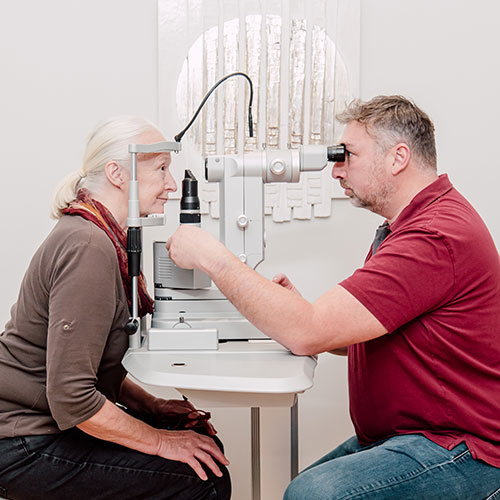
Dear patients,
Your wellbeing comes first: clear vision and the best possible care.
We provide personal, coordinated care from routine checks to outpatient surgery.
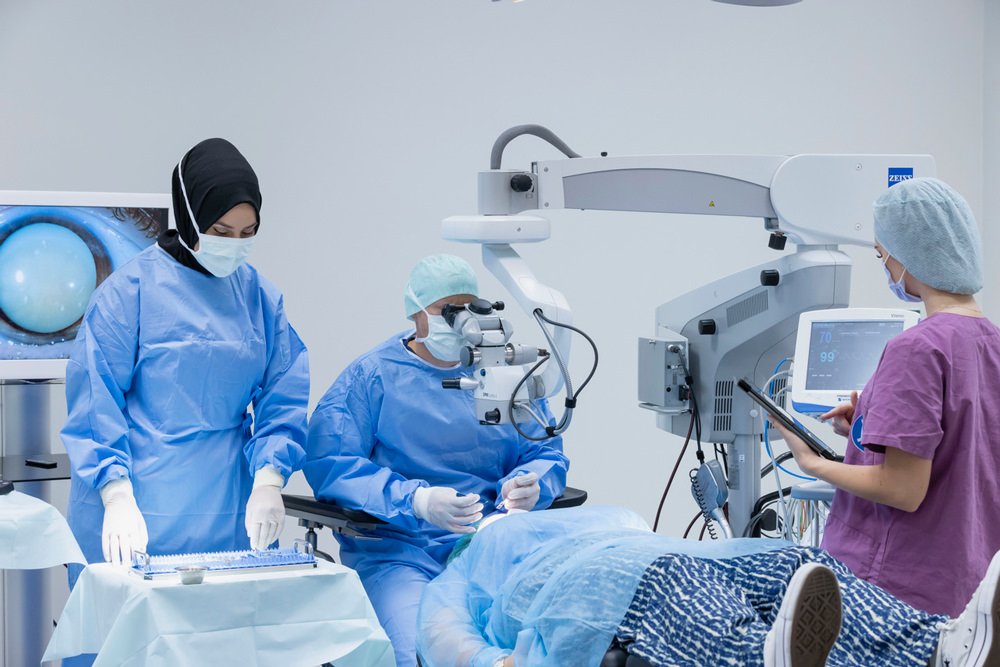
We perform outpatient eye surgery under local anaesthetic. The procedures are well established and carefully selected for each patient’s condition. Most patients can go home the same day. Healing and recovery times vary according to the procedure and your individual circumstances.
Surgical services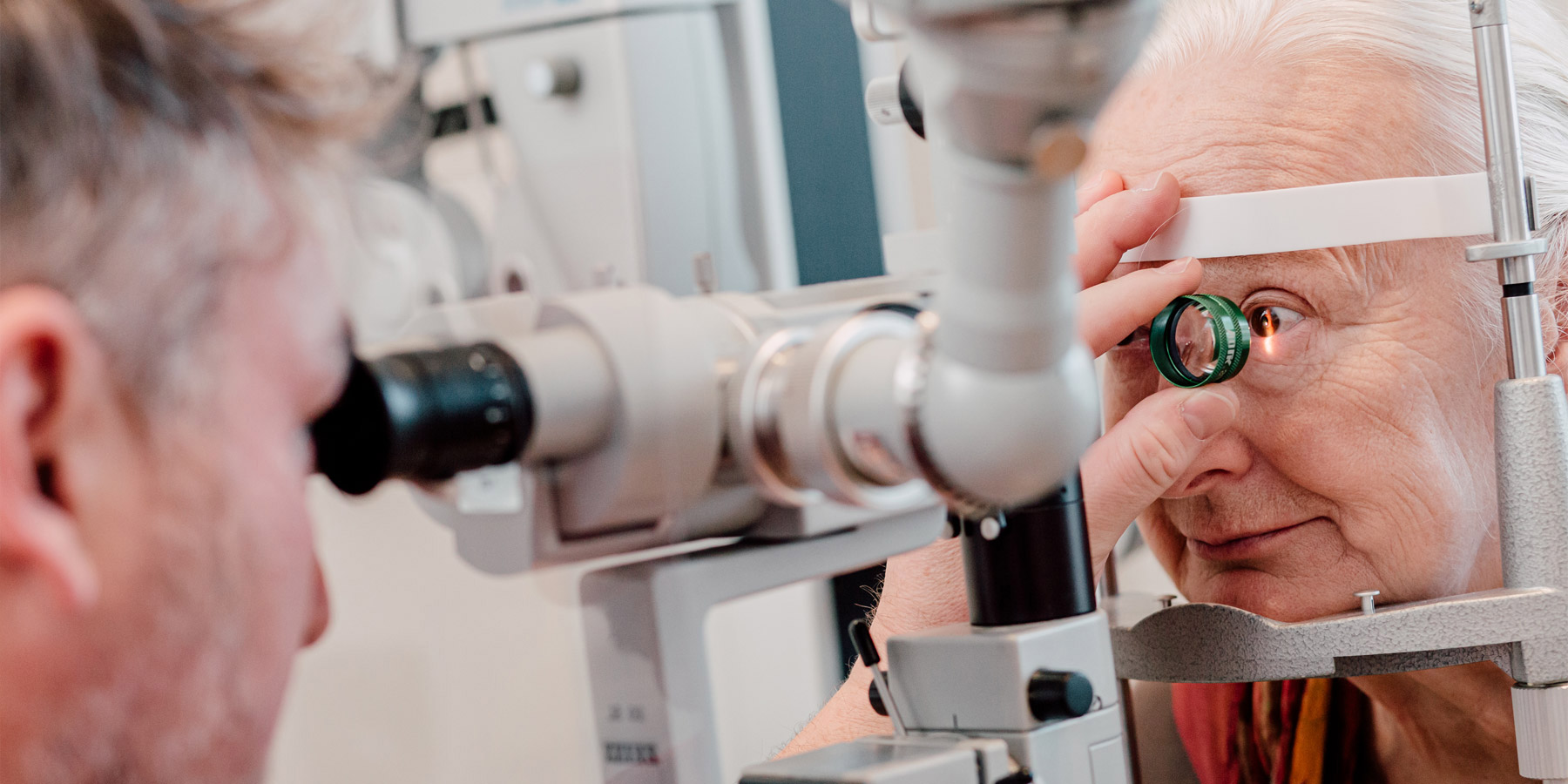
Our specialists diagnose and treat a wide range of eye conditions with care tailored to each patient. Options include medication, vision training and aids such as specialist glasses.
Non-surgical servicesWe support Füchse Berlin and its women’s team, Eisbären Berlin, Hertha BSC and the men’s team at Charlottenburger Handball Club.

Our logo appears on the warm-up shirts for the 2026/2027 season.
Learn more

As Hertha BSC’s eye care partner, we support the men’s professional team and the women’s and youth teams.
Learn more
We also support the men’s team at Charlottenburger Handball Club as a committed partner of Berlin sport.
Learn more★★★★★Super professional team‘Mr Heinrich’s care was excellent. He takes the time needed to make a diagnosis without any fuss. I’m very satisfied and happy to come back!’
A patient's experience
★★★★★Very good doctor‘Mr Heinrich took plenty of time to explain everything and answer all my questions, even with a full waiting room. That’s not something you can take for granted these days.’
A patient's experience
★★★★★Still my first choice‘I felt well looked after and went home feeling reassured. My concerns were handled and answered really well.’
A patient's experience
Book online, or contact a practice by phone or email using the details on our locations page.