Fluorescein angiography (FLA)
Imaging changes and blood vessels at the back of the eye.
Explained in detailNon-surgical examinations and treatments form the basis of early detection, targeted care and long-term protection of your sight.
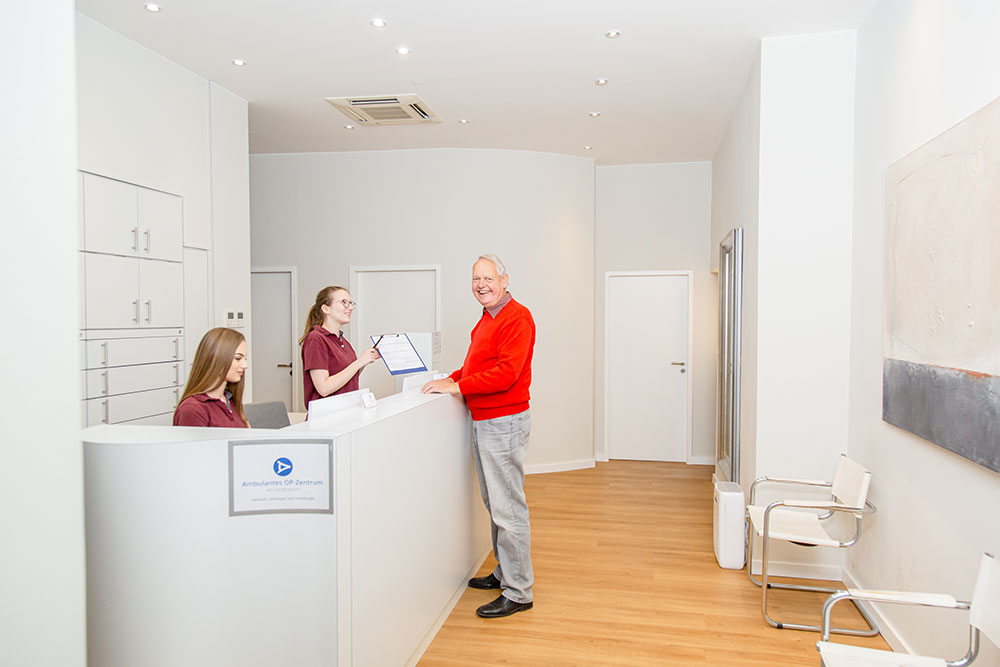
The non-surgical ophthalmology includes all non-surgical examinations and treatments. This includes care for acute eye conditions, injuries, inflammation and problems with visual function. To protect your eye health and detect disease early, we recommend regular Preventive eye examinations in our practice at Savignyplatz. Many diseases, such as increased eye pressure or Glaucoma, can go unnoticed for a long time without regular checks. An early diagnosis allows treatment to begin in good time.
Our diagnostic methods support accurate diagnoses, reliable monitoring and well-informed surgical planning.
Imaging changes and blood vessels at the back of the eye.
Explained in detailDiagnostics of retinal and macular diseases.
Explained in detailCross-sectional imaging of the macula and optic nerve, for example to monitor glaucoma.
Explained in detailAssessment of astigmatism and signs of keratoconus.
Explained in detailDetecting retinal detachment, tumours and changes within the orbit.
Explained in detailMeasuring eye length and calculating the artificial lens needed for cataract surgery.
Explained in detailMeasuring corneal thickness to help interpret eye pressure.
Explained in detailMeasuring the extent and sensitivity of your visual field.
Explained in detailMeasuring contrast sensitivity and adaptation to darkness.
Explained in detailImaging and tests of visual function provide valuable measurements and information. We always interpret them alongside your symptoms, medical history and examination findings. No single piece of equipment can reliably confirm or rule out a disease on its own.
We choose tests according to the clinical question. For medically necessary and self-funded tests, we explain benefits, limitations and possible costs beforehand.
Explore our examinations and treatments below. Open each section to find out more.
Vision can decline with age. A focused eye assessment checks your sight and the relevant driving licence requirements.
Glaucoma can develop even when eye pressure falls within the statistically normal range. Early detection therefore includes measuring eye pressure and examining the optic nerve head. Visual field testing and OCT may also be needed, depending on the findings. Your age and personal risk factors, such as a family history of glaucoma, help determine when and how thoroughly to check your eyes.
Selective laser trabeculoplasty (SLT) can lower eye pressure in suitable cases. It is usually well tolerated, although temporary inflammation or pressure changes may occur. Depending on the type of glaucoma, other options include YAG laser iridotomy, cyclophotocoagulation (CPC) and surgery. We clarify possible insurance coverage beforehand.
A specialised camera photographs the dye at set intervals, revealing leaking or blocked vessels and abnormal growth, for example in wet AMD or diabetic macular oedema.
The individual layers of the retina can be examined in detail. This helps diagnose and monitor conditions such as age-related macular degeneration and glaucoma. We always interpret the results alongside the clinical examination.
This quick, non-contact examination helps us document the central and peripheral retina. A wide-angle image cannot always replace an examination with dilated pupils. We choose the method according to the findings and what needs to be assessed.
The non-contact readings support further glasses or contact lens assessment. The final correction depends on subjective testing and the overall medical or optometric findings.
This examination can reveal signs of keratoconus or other changes in corneal shape. It also helps with fitting specialist contact lenses and planning refractive surgery. A condition cannot be reliably ruled out from a single measurement; we assess all the findings together.
Regular examinations reveal small changes. Early detection can often prevent vision damage or slow its progression.
We use the PlusoptiX device for a quick, non-contact screening from a short distance. Abnormal or inconclusive results need a full paediatric eye examination or orthoptic assessment. Depending on the child’s age, this may include measuring refraction with pupil-dilating drops.
Book online, or contact a practice by phone or email using the details on our locations page.